
❤️ KEEP YOUR PROMISES TO YOURSELF ❤️

There is always that inner voice that reminds you of who you are. It reminds you of your decisions, your promises, and the habits you owe yourself ❤️

When you consistently fail to keep the promises you’ve made to yourself, self-doubt and low self-esteem begin to set in. It often starts with simple commitments—some call them New Year resolutions, others call them personal goals. Whatever name you give them, what truly matters is your willingness to honour those promises ❤️

In Romans 7:22–25, Apostle Paul cried out to God about this internal struggle to do what is right:
“For I delight in the law of God in my inner being, but I see another law at work in me, waging war against the law of my mind… What a wretched man I am! Who will rescue me from this body of death? Thanks be to God, who delivers me through Jesus Christ our Lord!” ❤️

This passage gives us a clear picture of what inner conflict looks like—knowing what to do, yet struggling to do it ❤️

This Easter season reminds us of the resurrection of Jesus Christ—a powerful symbol of renewal and transformation ❤️

In that spirit, here are five things you should practise every day to become all you are destined to be:

1️⃣ Do not allow excuses to stop you.
For everything you desire, there will always be an excuse or opposing opinion. Sometimes, these excuses come disguised as advice or fear wrapped in comfort. Remember, growth does not happen in conformity—it happens through commitment. You must let go of who you are now to become who you desire ❤️

2️⃣ Keep every promise you make to yourself.
If you decide to wake up at 5am, do it—no excuses. Be realistic with your commitments so you can build consistency. This is how people develop the confidence to say, “If I decide to do it, I will do it.” It comes from years of honouring small promises ❤️

3️⃣ Do not allow people to live rent-free in your mind.
Many people cannot act without someone else’s approval. There comes a time when you must make your own decisions, because you know what is best for you. Seek counsel if needed, ask questions, learn—but in the end, the decision is yours ❤️

4️⃣ Do not wait for perfection before you begin.
As Thomas Aquinas said, “If the highest aim of a captain were to preserve his ship, he would keep it in port forever.” Risk is part of life. Move with intention, learn as you go, and take action. There is no better time than now ❤️

5️⃣ Pray and commit everything into God’s hands.
Pray as you work, because faith without action is incomplete. Trust God, but also take responsibility ❤️

As you celebrate Easter, don’t be carried away only by the physical festivities. Let this season mark a turning point in your life ❤️

Rise above excuses, self-doubt, fear, and the opinions of others. Work quietly, consistently, and patiently ❤️

Do not fail yourself. Be mindful of the promises you make to yourself—because they never forget ❤️

I remain your friend and brother,
Maazi Onuora Obodoechi ❤️

💞 A Call to Conscious Living: “Who Will Bell the Cat?” 💞

💖 “Who will bell the cat?” is a powerful metaphor that thoughtfully captures a reality many of us recognise: while problems are widely acknowledged and solutions often identified, there remains a visible reluctance—a lack of courage—to take responsibility and act decisively. This reflection invites us to honestly evaluate not just the issue, but our role within it.

💖 If we pause and sincerely engage people across the African continent on how to improve our societies, it becomes evident that many possess a clear awareness of what needs to be done. However, when it comes to implementation, there is a noticeable pattern of hesitation, often expressed through layers of excuses. This contrast between knowledge and action is both revealing and concerning.

💖 Our elders wisely said, “na obodo na agba ghara ghara bu uru ndi nze,” meaning that disorder within a society often serves the interests of those in positions of power. This proverb encourages a deeper, more critical reflection: who truly benefits from the lifestyle choices and societal structures we have collectively embraced? It challenges us to move beyond passive observation into active evaluation.

💖 Turning to the sensitive but important issues of prostitution and marital breakdown, one cannot ignore how what was once socially discouraged has, in many contexts, evolved into both a business and a lifestyle. This shift prompts an important reflective question: has prostitution always been embedded in our cultural fabric, particularly in pre-colonial times?

💖 Historical and cultural insights into pre-colonial Igbo society suggest a strongly community-oriented and family-centred system. Sexual relationships were closely tied to marriage, lineage continuity, and social responsibility. Importantly, women’s sexuality was not commodified but rather integrated within kinship and communal structures.

💖 While practices such as polygyny and woman-to-woman marriage existed, they were primarily functional—aimed at preserving lineage—and were respected social institutions rather than commercial arrangements. This distinction is crucial in evaluating how far current practices have diverged from foundational values.

💖 Additionally, social norms, taboos, and age-grade systems played a regulatory role in guiding behaviour. Habitual deviation from accepted sexual norms often resulted in social stigma, reinforcing communal accountability. This indicates that society once maintained clear moral boundaries that shaped individual conduct.

💖 Research and historical patterns suggest that prostitution became more visible and commercialised during periods of colonisation, urbanisation, and the introduction of wage labour systems. These changes gradually weakened traditional structures, replacing community-based values with cash-driven interactions. This transition appears to have significantly altered societal priorities and behaviours.

💖 This context highlights that earlier systems, despite their imperfections, offered a framework that safeguarded dignity, particularly for women and young people. Children were allowed the space to grow within structured environments where informal education—especially around relationships and responsibility—was guided by family and community. Boys were nurtured towards discipline and respect, while girls were taught self-worth, care, and emotional strength.

💖 In contrast, it is worth critically examining whether what is now framed as “freedom” and “choice” has inadvertently contributed to social instability. This is not a rejection of progress, but rather an invitation to thoughtfully assess its consequences.

💖 There is also a growing concern about the uncritical acceptance of foreign values, often perceived as inherently superior. This mindset, when left unexamined, can lead to a subtle form of mental dependency. Reflectively, we must ask: are we adopting these values with understanding, or simply out of admiration?

💖 Contemporary realities—such as increased contraceptive use among secondary school students, rising rates of sexually transmitted infections, and the emergence of health conditions previously uncommon—signal deeper systemic challenges. While these issues are complex, they raise important evaluative questions about parenting, societal priorities, and the shifting dynamics within families.

💖 The evolving roles of men and women, often framed as competition rather than collaboration, have also impacted family structures. When balance is lost, the foundational stability of the home can be weakened, sometimes to the advantage of external forces that thrive on disunity.

💖 The common assertion that “times have changed” is undeniably true. However, it is equally important to question why many traditional values were quickly dismissed as primitive, while unfamiliar cultures are embraced without full understanding. This calls for a more balanced and reflective approach to cultural evolution.

💖 When individuals begin to prefer external identities over their authentic selves, it may signal a deeper disconnection. This is not merely a cultural issue, but a question of identity and self-awareness.

💖 There is an urgent need to protect and guide younger generations. The normalisation of behaviours once considered socially harmful—including the participation of young men in prostitution—demands honest reflection. Where is this path leading, and what future are we collectively shaping?

💖 The silent erosion of marriages, the rise of loneliness, and the diminishing focus on long-term family continuity suggest a society gradually losing sight of its foundational values. These trends encourage us to think beyond immediate gratification and consider the long-term implications of our choices.

💖 Ultimately, many of the lifestyles and cultural patterns we see today are learned behaviours. This means they can also be unlearned. There is a clear and pressing need for collective dialogue—a return to the “drawing table”—to consciously decide the kind of society we wish to build.

💖 A particularly strong call is directed towards women, encouraging awareness and intentional action. Material possessions and temporary pleasures, while appealing, cannot replace the deeper needs for connection, care, and long-term fulfilment.

💖 In closing, a deeply personal and evaluative question remains: Would you be proud if your child chose someone like you? This question invites honest self-reflection.

💖 As the saying goes, “Obeta bu aha buru okwu”—enough is enough. And “O ma akwa asa ahu mara onwe ya”—he who bathes with his cloth on must be self-aware. These proverbs remind us that awareness is the first step towards meaningful change.

💖 I remain your friend and brother,
Maazi Onuora Obodoechi

🌸 A Wake-Up Call on Kidney Health: Choose Wisely, Live Fully 💖🌿

The rising rate of kidney failure in our country is deeply alarming 💔🌸. While many may quickly attribute this to our culture of drinking—where no occasion seems complete without alcohol, whether it’s a burial or a child dedication—it is important to reflect more carefully 💭💖. I have observed other countries where people drink even more than we do, yet they experience fewer kidney-related issues. This suggests that the problem is not just how much we drink, but what we drink 🌿🍷.

Beyond alcohol consumption, several lifestyle factors contribute significantly—drug abuse, living in hot climates without adequate water intake, the use of herbal medications without proper dosage, and excessive smoking 🌸💔. These habits, often overlooked, gradually damage our health.

Another concern is the mindset of “it is not my portion” 💭🌿. While comforting, this belief can lead to neglect. Despite growing awareness and education about kidney health, many people continue these harmful habits—and unfortunately, the rate is still increasing 💔🌸. Studies show that about 10–26% of adults suffer from chronic kidney disease, with hypertension and diabetes as leading causes. This translates to millions currently battling different stages of the condition in Nigeria 💖🌿.

It is even more troubling that dialysis centers are not sufficient, even for those who can afford them 💔🌸. One thing we cannot take away from humans is their will—but often, this will is clouded by ignorance or nonchalance 🌿💭.

Our forefathers lived differently 🌸💖. They drank natural palm wine in moderation, ate fresh and natural foods, worked actively on farms, stayed hydrated, and maintained balanced routines. It is no surprise that they did not face the level of health challenges we see today 🌿💪.

Today, however, things have changed 💔🌸. Palm wine is often adulterated, processed foods are everywhere, and sedentary lifestyles have become common. This shift has led to increases in hypertension, obesity, diabetes, and kidney failure—affecting even the most vulnerable populations 💖🌿.

Interestingly, these conditions were once considered “diseases of the wealthy,” but now the trend appears reversed 🌸💭. Many low-income individuals rely heavily on processed foods, while the wealthy invest more in natural diets, exercise, and healthier living 💪🌿.

Let this be a gentle reminder 💖🌸: embrace home-cooked meals, eat more vegetables, and engage in daily physical activity that makes you sweat. Being overweight or having excess belly fat is not healthy—but change can start gradually 🌿💪. Do not feel ashamed; instead, make a conscious effort each day.

Create a consistent eating routine that works for you—whether it’s 6, 8, or 12 hours of structured meals 🌸🍽️. If there is a history of hypertension, diabetes, or related conditions in your family, take time to learn about it and adjust your lifestyle accordingly 💖🌿.

Most importantly, do not be misled by advertising 🌸💭. These companies are focused on selling products—not safeguarding your health. Your wellbeing is your responsibility 💪💖. There is a clear difference between food and products. Let your food be your medicine, not your burden 🌿🍲.

This is not to say you should never enjoy your favorite snacks or fast foods 🌸😊—but be mindful. Just as the rat that plays with the lizard in the rain must consider whether its skin can dry like the lizard’s, we must also consider the consequences of our choices 💭🌿.

Remember: not everything that tastes good is good for you 💔🌸. What sweetens the tongue may trouble the body. Take care of your health—it is your greatest wealth 💖🌿.

Ndu ka aku… health is wealth. He that has ears, let him hear. 🌸💖

I remain your friend and brother,
Maazi Onuora Obodoechi 🌿🤝

A Cry for Safety, Unity, and Humanity ❤️

It deeply saddens me to constantly hear and see news about the indiscriminate killing of innocent people. ❤️ Just last week, a friend shared a terrifying experience—how they were abducted by men dressed in police uniforms. They were taken into an unknown forest and told to pay 5 million naira or face death. ❤️

In fear for their lives, they pleaded until they were forced to empty their accounts. Even after that, they were warned never to speak of the incident. This happened in Enugu. ❤️ It is heartbreaking that such evil persists, with people exploiting others who are already vulnerable and struggling.

What is even more painful is that these same perpetrators often protect the politicians responsible for the suffering we all endure, yet turn against ordinary citizens—people who are just as hurt but still choose to live honestly and peacefully. ❤️

Now, we are seeing students engage in rituals, taking the lives of fellow students in pursuit of quick wealth—wealth that leads only to destruction and a shortened life. ❤️

Please, everyone, let us be more security conscious. ❤️ The fact that someone is wearing a uniform does not guarantee safety. Always let someone know where you are going and who you are with. Avoid late-night movements and unnecessary outings—times have changed. ❤️

Do not be deceived by promises of cheap and easy money. ❤️ Many are lured with dreams of a better life abroad, without proper details of the jobs they are going into. Today, many of our people are stranded in foreign prisons, with little or no hope of freedom. ❤️

As we go through this difficult phase in our country and across Africa, let us remember that desperation and intimidation will not save us. ❤️ Only unity, compassion, and sharing will help us move forward.

I want to especially appeal to my Igbo brothers and sisters—let us return to the spirit of “onye aghana nwanne ya” and “onye nulu ube nwanne ya agbana oso.” ❤️ Let us not abandon one another in times of need.

Nigeria, and indeed Africa, must reflect deeply on the way forward. ❤️ We cannot continue like this. Change must begin with us—the people.

The truth is, it may be impossible to love everyone, but we must learn to respect and accommodate our differences. ❤️

To those committing these crimes, remember this: the native doctor who prepares the otolo charm is not immune to its effects. ❤️ Evil has consequences, and no one is above them.

Ndi be anyi, arukwusi… enough is enough. ❤️ Are we not tired? Have we become so helpless that we have lost the essence of our existence?

It is painful, yes—but let us all be careful. ❤️ You are your own first line of security now. The government may be overwhelmed at this moment, but we must not give up on ourselves or each other.

Nkwucha abughikwa ujo. ❤️

I remain your friend and brother,
Maazi Onuora Obodoechi ❤️

🌺 A Reflection on Ignorance, Freedom, and Our Shared Humanity 🌺

🌸 Ignorance is one of the worst things that can happen to a person. During the era of the slave trade, people’s hands were chained, but from colonization until today, it is the minds of people that have been chained. We now see individuals with sound bodies, yet their minds remain captive—bound to the same teachings and influences that have kept them restrained.

🌸 Look at what is happening to us today. Despite the realities in the country, many still defend their oppressors in the name of religion. It is a painful contradiction that continues to hold us back.

🌸 We are gradually approaching a point where human lives are reduced to mere statistics. The humanity within us is slowly being watered down, and we risk losing the very essence of who we are.

🌸 Imagine a Governor arriving at the scene of tragedy in an armoured car, offering only promises of a befitting burial for those who have been killed. A curfew is declared, yet the attacks lasted for hours without intervention. These are the realities we face.

🌸 It is a sad reality for us in Nigeria. Whatever the motives of those perpetrating these acts, they can only be stopped through the collective effort of all citizens. Otherwise, they will continue, conquering one community after another.

🌸 There was a time when leaders read and wrote books to share their ideologies. Today, many of the leaders we have seem to lack even a sense of their own minds, let alone clear ideologies.

🌸 It is indeed easier for a wise person to understand a foolish question than for a fool to understand a wise answer. Ignorance is a disease that has kept us on our knees, and religion has, in many ways, ensured that we do not recover from it.

🌸 My people, let us embrace one another and save our land. We have no other place to call home. Look at what is happening to Africans in South Africa and other African countries—we struggle even to tolerate ourselves.

🌸 It is a sad reality, but the only way forward is for each of us to work individually, yet collectively, toward the simple goal of freeing ourselves from mental slavery.

🌸 I remember my ancestors every day, and I hope they remember me. I remember Maazi Nnamdi Kanu, and I hope he remembers me. I remember all our heroes past, and I hope that one day, they will remember me… Onye aghana nwanne. Enough of this suffering and the killing of our people.

🌸 For how long will we stand and watch them kill our prophets? Until when will we rise, embrace who we are, and stop seeking validation from outsiders?

🌸 May the Almighty God help us to truly realise ourselves.

🌸 I remain your friend and brother;
Maazi Onuora Obodoechi

🌷 The Blood We Ignore, The Future We Risk

🌸 It saddens my heart to see vibrant youths lose their lives at the hands of bandits and terrorists in Nigeria, while the only solution offered by the government is rehabilitation. Even more troubling is how 🌸 It saddens my heart to see vibrant youths lose their lives at the hands of bandits and terrorists in Nigeria, while the only solution offered by the government is rehabilitation. Even more troubling is how ordinary citizens have become divided among themselves. After the celebration of Palm Sunday on 29-03-2026, while many rested in their homes, the people of Jos, Plateau State, Nigeria, were fighting for their lives.

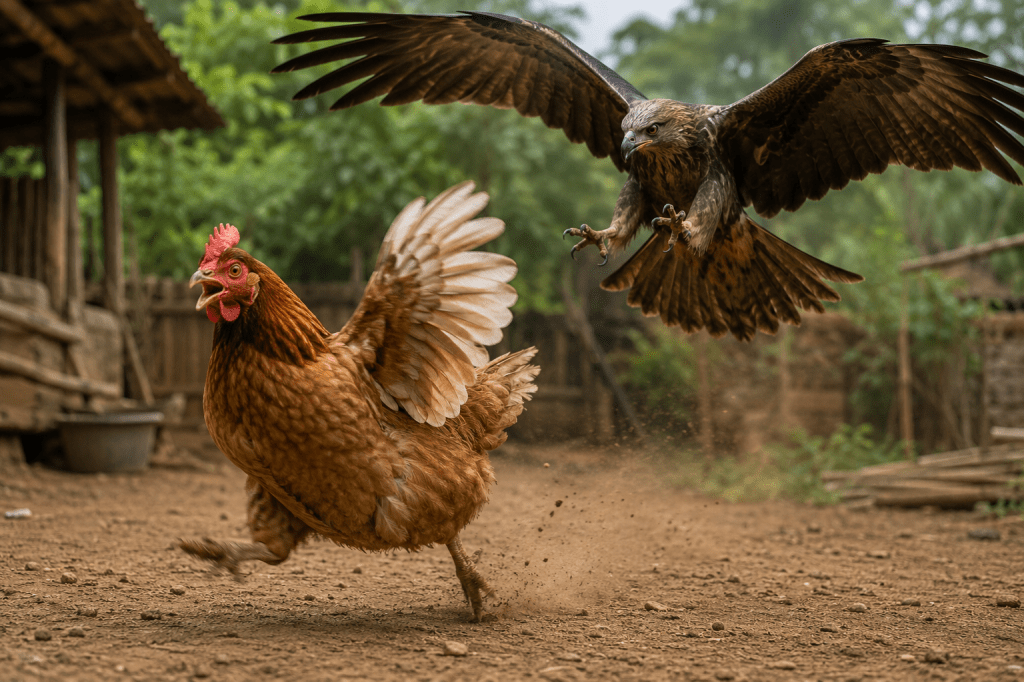
🌼 One begins to wonder—do we truly have a government, or have we become a defeated people in our own land? Like chickens crying out while hawks perch quietly above, watching, it seems they have grown accustomed to our wailing without action. What can we do when our defence leadership speaks more of rehabilitation and forgiveness for these so-called prodigal sons? It is deeply shameful that anyone would take a life they can neither create nor restore.

🌷 How long will we continue to watch children become orphans, and parents become childless? Imagine a mother holding her son as life slowly slips away from him. The only thing I can urge is this: everyone should get their voter’s card, because whether you vote or not, you have chosen a stand. The fall of a yellow leaf is a warning to the green ones—just because it is not happening to you now does not guarantee your safety.

🌻 All hands must be on deck to stop these acts. This is not the time for religion, politics, or tribe—this is a matter of survival. Agwo di na akirika ooo…

🌺 May the blood of the innocent lives lost on Palm Sunday stir every living soul into action, that we may confront this cankerworm for what it truly is, and not as “our children,” as the government would have us believe.

🌼 It is painful beyond words to watch human beings die like flies in their own nation, while those in authority seem more concerned about elections. Tufiakwa!!

🌸 ndi beanyi Taa bu gbooo!! we need to wake up.

I remain your friend and brother,
Maazi Onuora Obodoechi

🌸 Love, Fear, and the Future of Our Families ❤️

I recently listened to a video clip of a popular Nigerian celebrity who expressed that he is “scared of getting married.” 🌸❤️ Notably, his fear was not rooted in concerns about infidelity, but rather in the uncertainty of whether he would be able to sustainably provide for his family in the future.

This reflection highlights what fear can do—it robs us of the opportunity to truly live and fully embrace meaningful commitments. 🌸❤️ However, beyond this, there is a broader concern worth examining: the direction many women appear to be taking today, often described under the label of being “woke.” It raises an important question—who introduced this idea, and why has it been so readily accepted without critical reflection?

In my view, Black women remain among the least protected globally, even as conversations across Africa increasingly center on critiques of women, while more pressing continental challenges persist. 🌸❤️ Interestingly, African women are highly intelligent and hardworking, which may also make them more susceptible to certain ideological narratives, including the concept of equality with men.

It is important to approach this carefully. While every human being—regardless of gender—deserves respect and dignity, the notion of absolute equality within the family structure can sometimes create competition rather than cooperation. 🌸❤️ Even among men, there is no absolute equality, which suggests that our differences are natural and structural.

Whether widely accepted or not, there are roles traditionally associated with each gender. As Africans, there is value in embracing a culture that respects both men and women, protects its women from external harm, and safeguards families from destabilizing influences. 🌸❤️

Today, many people are increasingly hesitant about commitment. We now hear distinctions between “traditional” and “modern” marriages, with the latter often characterized by competition and ongoing disputes over roles and authority within the home. 🌸❤️ Unfortunately, the greatest impact of this tension is felt by children, who may grow up learning how to avoid disrespect, but not necessarily how to cultivate respect.

In summary, we must not allow fear of the unknown to prevent us from loving deeply and committing wholeheartedly to our partners. 🌸❤️ It is also time to foster a culture that protects women, reduces unnecessary social media conflicts between men and women, and redirects focus toward building and strengthening our continent.

Most importantly, our children are our future. Let us begin to create environments where they can grow with love, mutual respect, and a strong sense of identity. 🌸❤️

Look before you reap; learn to remain committed if you choose marriage. 🌸❤️

I remain your friend and brother,
Maazi Onuora Obodoechi 🌸❤️

🌸 Breaking the Cycle: Understanding Systems, Building Wealth, and Enduring Growth ❤️

Our people have a saying: a tree that grows along the road to the farm is at risk of receiving many knife strikes daily. Likewise, a tree that bears the finest fruits attracts the most stones. 🌸
This reminds us that anyone who chooses to bring light into their family must learn to endure the heat that comes with it. ❤️

Today, let us reflect on something very important—something many are working tirelessly to overcome: poverty. 🌸
One may ask, “We brought nothing into this life, so why do we now pay for almost everything?” Over time, individuals have created tools and systems—such as telephones, cars, and computers—that have made life more efficient. ❤️

However, it is important to evaluate why some people have so little while others have so much, and how wealth is sustained across generations. 🌸
Historically, slavery has been recognised by the United Nations as one of the gravest crimes against humanity, with ongoing discussions about reparations. While this marks a meaningful step toward healing, it is equally important to understand what sustained such systems in the past—and how similar structures may still exist today. ❤️

If we reflect deeply, we realise that such harmful systems could not have thrived without internal participation or beneficiaries within them. 🌸
This raises an important question: have these systems truly been abolished, or have they simply evolved into modern structures such as capitalism? In many ways, people now operate within systems they may not fully recognise—systems that influence opportunities, lifestyles, and even longevity. ❤️

The purpose of shedding light on this is to help you understand how systems function. They are not always obvious, and until you consciously work on your own plans and direction, breaking free from limiting cycles becomes difficult. 🌸
Systems are often created for control and profit; therefore, resisting them without understanding them can be likened to a goose celebrating that it produces oil, unaware it is being burned. ❤️

When you take time to study patterns—whether in life, family, community, or nation—you gain the ability to make more accurate predictions about the future. 🌸
My encouragement is this: observe these patterns, translate them into measurable outcomes, and evaluate where they may lead if unchanged. ❤️

If you are working to break the chain of poverty in your family, study its root causes—not to assign blame, but to design systems that preserve progress. 🌸
This ensures that future generations do not lose what has been built through sacrifice. ❤️

Do not simply conform to the systems of the world. As you climb the ladder of success, be intentional about creating sustainable wealth for yourself and your family. 🌸
It is worth reflecting that pensions often come when one is retired and less active, while life insurance benefits others after one is gone. While these systems are not inherently bad, they should not be your only plan. ❤️

Strive to rise above dependency on such cycles. Build wealth that serves you while you are alive and continues to support your family beyond your lifetime. 🌸
Let mortgages or insurance be part of your plan—but ensure your personal, long-term plan is stronger and more empowering. ❤️
For those in environments with fewer structural supports, the responsibility becomes even greater: use your strongest years to build systems that will sustain you for life. 🌸

Ultimately, anyone who seeks to bring light to their family must learn to endure challenges. Monitor your habits, your health, your lifestyle, and your environment. 🌸
Engage with your community and governance, and contribute to positive change that benefits others. ❤️

Remember: if you are born poor, it is not your fault—but if you die poor, you share in the responsibility. 🌸
To create meaningful change, you must be willing to do what you have never done before—equip yourself with knowledge and reject mediocrity. ❤️

I remain your friend and brother,
Maazi Onuora Obodoechi 🌸

🌸 The Strength of Humility and Intentional Living 🌸

What does it truly mean to be humble, or to possess virtues like kindness and gentleness? 🌼 Sometimes, when people hear that someone is humble, they mistakenly assume weakness or foolishness. This often becomes clear when such a person refuses to do something, and others respond with words like, “I thought they said you are gentle, humble, nice…” 💭

But humility, like every other virtue, is not an emotion—you don’t simply feel humble 🌷. It is a decision of the will, expressed through deliberate actions.

There is no doubt that people can appear gentle, humble, or kind, but it is their consistent actions that truly reveal who they are 🌺. Being nice or kind should be a conscious choice—just like the man who tried to save a stinging scorpion. His kindness came from within, with no expectation in return 🌼.

Therefore, do not live your life on autopilot 🌿. People will always push boundaries, and if you allow yourself to be taken advantage of simply because you want to appear humble or kind, then it is time to rethink 🌸.

A father once asked his teenage son during a heated argument, “Why do you think we provide for you?”
The son replied, “Because you love me.” 💕

The father chuckled and said, “Love? My dear son, it is our responsibility to provide for you and your siblings. Our actions are not necessarily based on feelings or on whether you do good or bad. We made a decision to bring you into this world, and our commitment is to raise you to handle your own responsibilities. The love, care, and compassion you receive from us are decisions—not reactions—and they do not depend on you.” 🌷

This may sound harsh, especially in today’s world of gentle parenting, but as our people say, it is always good to tell the bitter kola that it is bitter while still on the tree 🌿.

My point is this: whether with siblings, a partner, parents, or in the workplace, let your actions be guided by intentionality and conscious decision 🌼. As others benefit from you, you should also benefit. Always remember—you are an important part of the equation 🌸.

Appreciation and gratitude from others are beautiful, but do not let them control how you live 🌺. Otherwise, people’s actions—or inaction—will begin to dictate your life.

Finally, strive each day not to always be on the receiving end 🌷. Make a conscious effort to appreciate those who support you, and guide your kindness with wisdom 🌼. In a world where kindness, humility, care, and love are sometimes mistaken for foolishness, be mindful not to let those without love to give stop you from being who you are 🌿.

Continue to be kind. Keep smiling—because when you smile, you feel well 🌸😊

I remain your friend and brother,
Maazi Onuora Obodoechi 🌼

🌸❤️ Reflections on Life, Death, and the Legacy We Leave Behind ❤️🌸

Last night, I found myself in deep reflection about friends I once knew who are no longer here. I remembered celebrities, pastors, presidents, and great men and women who once graced the face of the earth but now live only in memories. 🌸 Some carved their names through remarkable works, while others are remembered for the atrocities they committed. Either way, they are remembered.

Then a thought struck me deeply ❤️—what about those who gave silently and selflessly, yet were gradually and systematically erased? What about those who gave their all to their families, only for their memories to be tarnished or completely forgotten? Even our forefathers have, in many ways, been victims of such misplaced attribution—but that is a story for another day. 🌷

This led me to reflect on what it truly means to die. Many people today are held in a kind of emotional and spiritual captivity by charlatans in religious attire, who offer a comforting but misleading promise: “You shall not die.” 🌸 While these words may sound soothing, they are not entirely true, because every human being will eventually experience physical death. The real question, however, is not if you will die—but what you are dying against. ❤️

Medically, death is defined as the complete cessation of all biological functions. When the brain ceases to function, a person is confirmed physically dead. 🌿 This is a reality that awaits everyone—the only difference is time.

But this reflection is not about debating whether people die or not. Rather, it is a gentle challenge 🌸 to rethink and understand death within the broader context of existence and beyond.

Death, in itself, is a transition—a transformation, a transcendence into another level of consciousness. What truly dies is the body, not the soul. ❤️ In this sense, the body is like a garment, worn by the soul to fulfill a purpose for a time.

So instead of allowing the body—aware of its mortality—to distract the soul, which is immortal, from reaching its full potential, we must take charge 🌷 and live life intentionally and fully.

Remember when the time came for Jesus to carry His cross. The body, as always, resisted pain and suffering and pleaded for relief. Yet God, understanding the weakness of the flesh, acted in the greater interest of humanity. 🌸❤️

In the same way, we too must learn to “die” to certain things—fleshly desires, unhealthy habits, toxic associations, and distractions that pull us away from our purpose. 🌿

So the next time someone says, “You shall not die,” agree with understanding ❤️—your soul is indeed immortal. But do not allow the fears of your mortal body to control your life.

Life and existence are deeply practical 🌸. They are not about seeking comfort alone or chasing soothing words that only feed ignorance. Many people merely exist, but to truly live—and to live in the hearts of others—is to live forever. ❤️

In Igbo tradition, death is not seen as the end of life, but as a transition—a journey to join the ancestors. 🌷 The real concern arises when a young person dies prematurely, prompting deep reflection and inquiry into the cause, so that balance may be restored.

As I conclude this reflection 🌸, I reiterate: instead of waiting, praying, and fasting solely to avoid death, begin to live out your full potential. In doing so, the longevity you seek will be etched into eternity, because this body we wear will one day grow old and weary. ❤️

Secondly, understand that death is not the end, but a continuation of life in another dimension. Therefore, live fully while you are alive, and take responsibility for your journey. 🌿

Finally, reconnect with your roots 🌸. Learn the values, the dos and don’ts of your community. Do not remain ignorant, for whatever a person sows, that they shall also reap. ❤️

You are immortal. Do not allow fear to keep you asleep. And if you must die, then let it be a death to everything negative—everything that seeks to destroy or pull you away from your purpose. 🌷

With love and reflection, ❤️🌸
I remain your friend and brother,
Maazi Onuora Obodoechi

Is this your new site? Log in to activate admin features and dismiss this message
Log In