
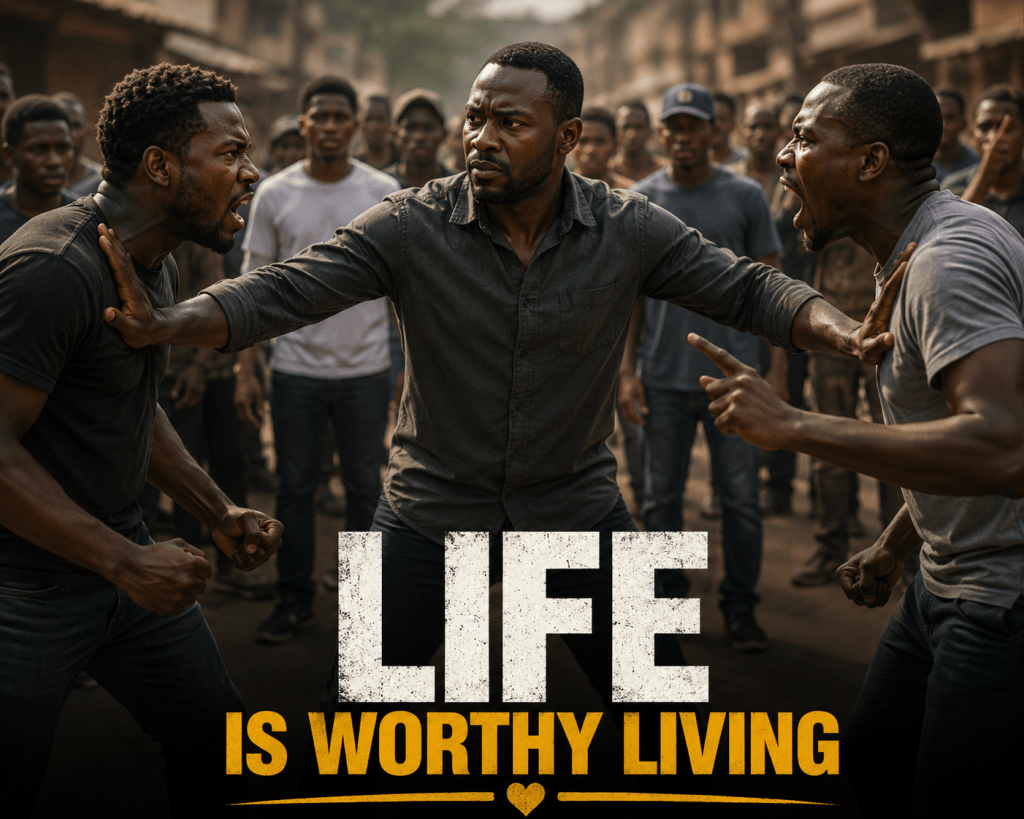
The death of Caesar could not have been as painful if he had been murdered only by his enemies. He was truly broken when he saw that Brutus was among those stabbing him. At that point, the pain was no longer physical—it had become psychological and emotional.
The recent killing of a UniJos student over the alleged theft of a phone, which was later found days after he had passed away, is yet another painful reminder that wickedness and a lack of compassion still exist among us.
The question—and the advice—on everyone’s lips has been to be mindful of our friends and the company we keep. While that is necessary, I personally believe the problems we face today have more to do with what I call suppression syndrome.
This is a situation where, as a people, we have been subjected to poverty and intentional hardship, while the very people responsible for our suffering remain the ones many look up to as role models. Everyone internalises his or her pain with the hope that one day things will get better. The issue is not having hope or faith in oneself; rather, it is the lack of awareness of the pain we suppress in order to keep that hope alive. Often, we do not realise how much pain we carry until something threatens or appears to stand in the way of what we hope to achieve. That is when the beast within emerges.
If this were not true, tell me: how were the senators able to convince Brutus to turn against Caesar? What could make friends forget the character of their classmate and resort to violence instead of seeking other ways to resolve an allegation of theft? Those unresolved pains, born out of intentional hardship, are among the major causes of the sacrilegious acts we witness across our nation today.
The interesting thing is that suppression syndrome also affects how we relate to one another in our everyday lives. For instance, some people feel smart or clever because they have cheated or deceived someone, whereas in many other nations, the vulnerable are protected.
A good example is the recent news from Japan, where after a toll gate was repaired, more than 20,000 motorists voluntarily contacted the operators to pay their outstanding tolls. The key point is that they did so willingly because they believe in the system, they trust the system, and they value both themselves and others.
My point is that the current situation in Nigeria has made many people focus more on the outcome than on the process. As long as the outcome appears good, people assume the process must have been legitimate. Every now and then, people are caught with human body parts. They are beaten or jailed without any effort to investigate those who finance or profit from these crimes. Many families are in agony. Some parents are childless, not because they never had children, but because their country has failed them.
Perhaps the most heartbreaking consequence of this situation is the growing devaluation of human life. There is now an overwhelming urge to prove that we are not suffering, leading to increasing materialism at all costs—even when it involves taking another person’s life.
Nevertheless, in this clouded horizon of hopelessness in which we find ourselves, it is important to remember that no matter how difficult or frustrating life becomes, you should never be quick to take another person’s life.
The displacement of anger and punishment should not be directed at those whose coping mechanisms have failed them. I am referring to those who wrong you on the street or steal from you. Rather, our collective anger should be directed towards those who continue to hoard our common wealth for themselves while leaving millions in hardship.
I am not making excuses for criminals. What I am saying is that even when you realise someone has wronged you by stealing from you, your default response should never be to take that person’s life—except, of course, where your own life is under immediate threat.
I sincerely believe that, at this critical moment in our nation’s history, what will help all of us overcome these challenges is love and compassion. We need empathy for those in desperate need of help, compassion for those who have suffered loss, and genuine love for ourselves and for one another. Many families are hurting. Imagine the parents of the UniJos student, the family of the beheaded teacher, the children trapped in kidnappers’ dens, and the countless others whose whereabouts remain unknown to this day.
It is imperative that we become the opposite of what our oppressors want us to become. We must be our brother’s keeper, because the true test of a person’s character is revealed in times like these—when everything seems uncertain, hope appears lost, and hardship is accepted as a way of life. This is the time to define yourself by your morals and values. Be a protector of the vulnerable, not a predator.
There is no doubt that it is difficult to maintain one’s morals in our present circumstances. Even so, by all means, choose what is right. Be safe, and keep others safe as well.
No amount of money is equal to a human life. Speak up when you need help. Do not suppress your pain. And remember that love, compassion, and empathy remain powerful enough to carry us through these difficult times.
I remain your friend and brother,
Maazi Onuora Obodoechi.

