
The liver is one of the most important organs in your body. It works hard every day to filter toxins, support digestion, and keep your system balanced. When you drink alcohol, your liver takes on the job of breaking it down and removing it from your bloodstream. While it can handle small amounts, too much alcohol over time can cause serious damage.
What Happens When You Drink?
When alcohol enters your body, the liver processes it into less harmful substances. However, this process creates toxic byproducts that can harm liver cells. If you drink occasionally and in moderation, the liver usually recovers. But frequent or heavy drinking puts the liver under constant stress.
Short-Term Effects
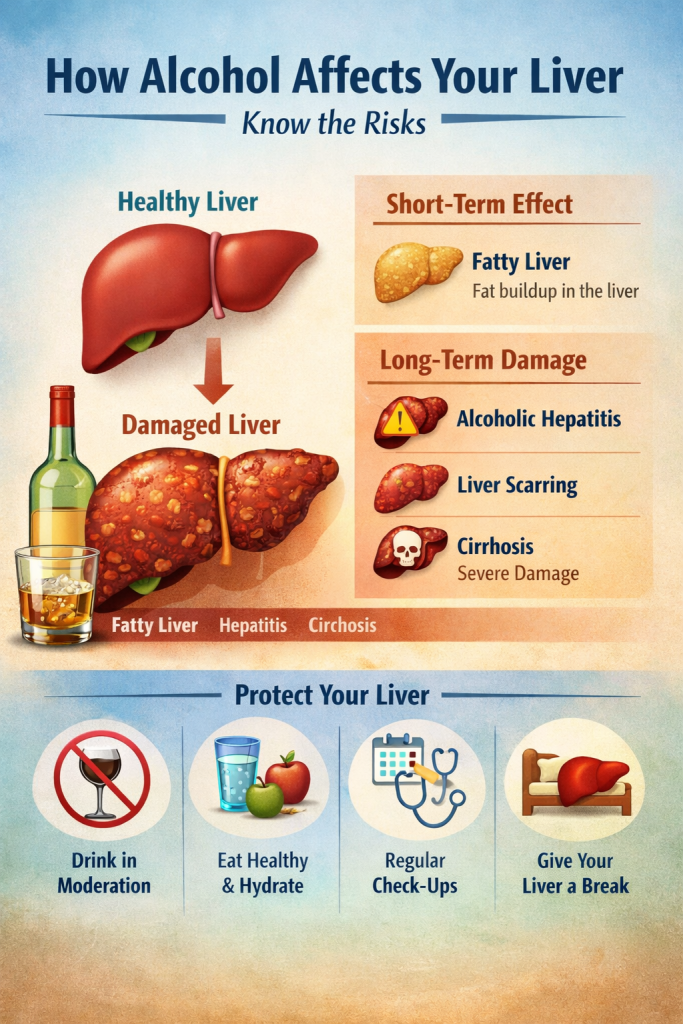
In the short term, alcohol can cause inflammation in the liver. This condition, known as fatty liver, happens when fat builds up inside liver cells. It often has no symptoms, but it is an early warning sign that the liver is struggling.
Long-Term Damage
Continued alcohol use can lead to more serious conditions, including:
- Alcoholic hepatitis: Inflammation that can cause pain, fever, and jaundice.
- Fibrosis: Scar tissue begins to form in the liver.
- Cirrhosis: Severe scarring that permanently damages liver function and can be life-threatening.
Can the Liver Heal?
The liver is unique because it can repair itself. If alcohol consumption is reduced or stopped early enough, conditions like fatty liver can be reversed. However, advanced damage such as cirrhosis is often permanent and requires medical care.
Tips to Protect Your Liver
- Drink alcohol in moderation or avoid it altogether.
- Stay hydrated and maintain a balanced diet.
- Have regular health check-ups if you drink frequently.
- Give your liver time to recover between drinking occasions.
Final Thoughts
Your liver plays a vital role in keeping your body healthy. Understanding how alcohol affects it can help you make better choices. Small changes today can protect your liver and improve your overall well-being in the long run.
 Pen it down.