
There is growing awareness of what many now call the olodo culture—a culture that glorifies behaviour that lacks moral values. It is reflected in the excessive respect people have for money and those who possess it, as well as the attention given to activities that do not improve us but instead deepen ignorance.
Beyond the olodo culture, however, there is another challenge we must confront: the joke culture. This is the habit of reducing matters of national importance into mere entertainment and content for social media. There is an old saying that only a madman mistakes his phallus for a lizard and laughs while it clings to his body. The point is simple: not everything should be laughed away.
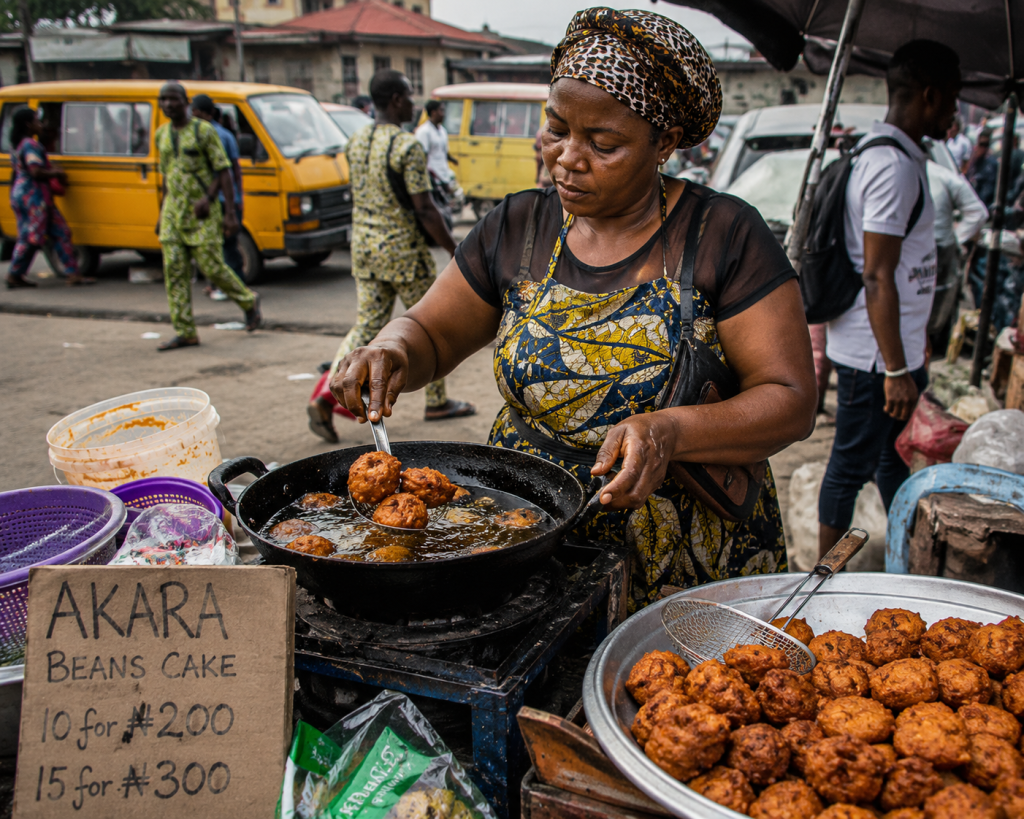
Recently, Nigeria’s First Lady made a statement encouraging people to start selling akara (bean cake balls). As usual, the familiar “chicken response syndrome” followed. While the statement itself sparked debate, what happened afterward was not only disappointing—it was predictable. We once again reduced a serious national conversation into jokes, memes, and viral content.
People created memes and skits, not necessarily as a form of protest or constructive criticism, but simply to “catch cruise.”
The unfortunate implication is that the average woman who depends on selling akara or similar businesses for survival is indirectly portrayed as foolish, helpless, or lacking ambition. Instead of feeling respected for engaging in honest work, the constant ridicule surrounding such businesses sends the opposite message.
Akara and kuli-kuli are legitimate businesses. Anyone involved in them should be proud of their work and aspire to grow and expand. Honest labour deserves dignity. However, we must also acknowledge that there is more to nation-building than constantly asking citizens to survive on the bare minimum while avoiding deeper conversations about economic opportunities and good governance.
Looking beyond our borders, the situation in South Africa offers an important lesson. While I do not support violence or the taking of innocent lives under any circumstance, one cannot ignore the level of patriotism demonstrated when people put aside ethnic and political differences to pursue what they believe is in the interest of their nation. Their methods may be wrong, but their sense of collective purpose is worth reflecting on.
Meanwhile, Nigerians remain deeply divided. We continue to tolerate insults, worship wealth regardless of how it is acquired, and somehow convince ourselves that we do not deserve better governance.
My question is this: At what point do we finally say, “Enough is enough”? What more are we waiting to witness before we become truly concerned and determined to reset our national priorities?
The truth is that no one can consistently look down on you without your permission. If citizens do not even understand what they deserve, how can they know what is worth fighting for?
I believe the olodo culture thrives because of the joke culture we have embraced. It seems the entire continent is expected only to dance, sing, and entertain. Is that all our culture represents? We proudly call ourselves the world’s entertainers, yet many of those paying for our entertainment cannot even dance themselves. And when I say “people,” I am not referring only to foreigners. Sadly, many of our own brothers and sisters are also complicit.
Ultimately, the solution to this confusion begins with each of us. We must first accept that we deserve more. We must read, think critically, hold leaders accountable, and vote wisely. It is good to be childlike in humility, but it is dangerous to remain childish in our thinking.
What is your take? Do you think we, as citizens, are complicit in sustaining the very system we complain about? I would love to hear your thoughts in the comments.
I remain your friend and brother,
Maazi Onuora Obodoechi

