
I have come to believe, more deeply than ever, that we must learn to appreciate what we already have as a people. Like a garden abandoned for distant fields, we have slowly turned away from the flowers that once bloomed in our own soil. And in doing so, we began to forget their fragrance.
Many of the things we accept today were not truly changed in essence—only renamed. And like love misunderstood, once the name changes, the meaning slowly fades.
There was a time when the sight of a rainbow stirred something sacred within us—a reminder of the covenant between God and Noah. It was not just a display of colors, but a quiet promise stretching across the sky like a flower opening after the rain. But today, when we see it, what do we remember?
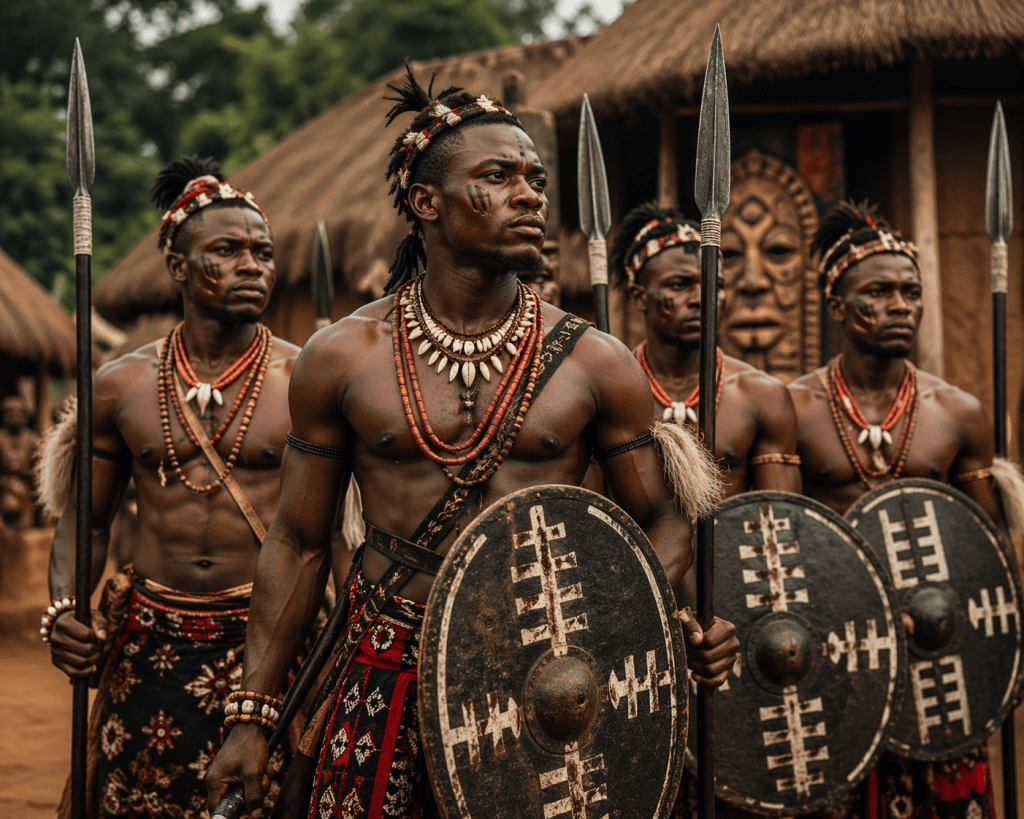
During the Ekumeku War, before our defeat in 1911, the Anioma people stood strong, fighting with the guidance of the goddess Ekwensu. To us, this was a source of strength, a force of protection. But after the war, that same name was reshaped, redefined, and labeled as evil. Yet we rarely pause to ask—evil to whom? Certainly not to the people it once served, but to those who came as invaders. Like a flower renamed a weed, we began to reject what once gave us life, even praying against it without understanding.
In earlier times, when wrongdoing became widespread, communities turned to sacred oaths—Aru kwu si—binding truths spoken before the land and the ancestors. It was a system rooted in accountability, like tending a garden where every hand knew its responsibility. Today, such practices are dismissed as evil, and in their absence, disorder grows unchecked like thorns overtaking a once-cared-for field.
When crises arose, elders gathered—Ichie and Ndi Ozo—men bound by truth, men whose words carried the weight of life itself. To become Ozo was not a matter of wealth, but of sacrifice and honor. A covenant was sealed with blood touching the soil—a sacred connection, like planting a seed with intention, trusting it to grow in truth. Today, these traditions are replaced, often commercialized, or condemned when practiced in their original form.
And so, we find ourselves in a strange place—embracing the ways of outsiders who once misunderstood and redefined us. We see the consequences in our society: the rise of chaos, the loss of accountability, the destruction of shrines, and the longing to seek holiness in distant lands while neglecting the sacredness of our own. Why have we stopped seeing our own land as holy ground, rich with meaning?
My people, instead of uprooting our traditions, why not nurture them? Why not reclaim their true names and meanings, allowing them to bloom again in their rightful form?
I remember stories—like that of a man from my village who, in a time of drought, wept and called forth rain in a distant land. His presence alone was honored, his spirit recognized. Or when invaders threatened our people, the sound of the Ikoro called men to action—men who stood not in fear, but in unity, defending their home like guardians of a sacred garden.
Today, too often, we wait. We watch. We hope for distant help while our roots grow weaker.
The values that once made us strong have not disappeared—they have only been neglected, like flowers left without care. We have embraced cultures we did not fully understand, while turning away from our own, even condemning them. Ironically, what we reject is sometimes studied, practiced, and preserved elsewhere, while we let ours fade.
This is not a call to reject all that is new, but to reflect. To find balance. To merge knowledge wisely, without losing ourselves in the process. Love, after all, is not about abandoning one for another—it is about understanding, honoring, and nurturing what truly belongs.
Let us not sell our identity for a fleeting gain. Let us remember who we are.
May our ancestors guide us, like sunlight returning to a forgotten field, helping us find our way back—so that we may grow again, stronger and wiser.
Isee!!
I remain your friend and brother,
Maazi Onuora Obodoechi

