
Globally, youth is defined as the transitional stage between childhood and adulthood. According to the United Nations, the age bracket for youth is 15–24 years. 💕
However, within the African context, once you are not married, you are still perceived as a youth. This mindset—measuring youthfulness by marital status or material possessions—has caused many young people who should already be stepping into positions of authority to still see themselves as children. 💕
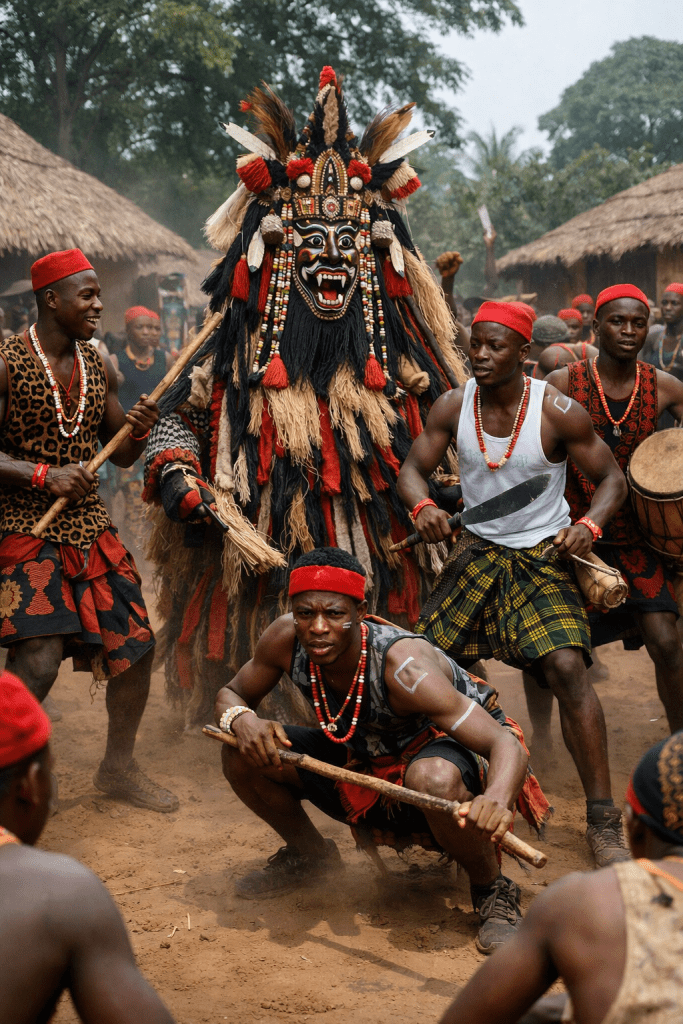
In the olden days, we had the Otu Ogbo (age-grade system), which often began as early as ten years old. At that age, boys hunted with their peers, wrestled, and participated in masquerade traditions as preparation for adulthood. Once initiated into the masquerade society, a boy transitioned into manhood. He could lead his sisters—and even his mother—to the market during festivals. 💕
By fifteen, your age grade carried real responsibility within the community. Whether as warriors or farmers, you were expected to have discovered your path in life. You were no longer considered a child. 💕
Over the years, this system of intentional upbringing has decayed. Today, at thirty-five, some still answer “youth” in their communities and cannot take a definite stand on issues that matter. 💕
Many people even use poverty as a measure of youthfulness, postponing wealth creation until a “certain age.” This explains the backlash when a young person builds a house or succeeds financially at twenty. It is often seen as abnormal. In doing so, we unknowingly promote a mindset of laziness and limitation among our youth. 💕
We have moved forward, but without carrying the substance of our culture and customs with us. There is a troubling rate of youth deaths, yet little questioning or accountability. 💕
Let me say this clearly: the survival of any nation depends not merely on the number of its youth, but on their viability. The son of a wealthy father who is not well trained may one day work for the son of a poor father who was trained with discipline and purpose. 💕
Africa may have a large youth population, but if many still believe they are children, how can they compete with nations that awaken and groom their youth early? 💕
This is why you see presidents of other countries who are young and vibrant, while in many African nations, leadership is recycled among older men. The leaders of tomorrow are dancing online—and why shouldn’t they? They are still seen and treated as children. 💕
My people, it is good to be a child, but it is dangerous to remain one. 💕
If you are between 15 and 24 years old, wake up—you are no longer a child. You are qualified to start a business while in school. You are qualified to participate in elections. You are qualified to study how things are done in your village, your community, your country, and the world at large. 💕
This message goes to both male and female. Africa, wake up. You have slept for far too long. Let us revisit the substance and models our fathers laid down, and refine them to fit today’s world. 💕
Our uniqueness is our power. We have learned the languages and cultures of others, and that is empowerment—especially because our own culture still stands. 💕
I hope you understand the heart of this message. Its purpose is simple: realize that you are no longer a child. Get involved in the affairs of your nation. Become part of the solution to building a better world. 💕
He who has ears, let him hear. O ma akwa asa ahu mara onwe ya. 💕
Our people asked: kedu uru o ga abara onye isi nkwocha iga ogu ana abu okpu n’isi? (what gain is it for a bald-headed man to engage in a head-knocking competition? ) Your guess is as good as mine. 💕
Deemenu!! 💕
I remain your friend and brother,
Maazi Onuora Obodoechi 💕

